


Areas of Expertise
Peripheral Nerve Surgery (Upper and Lower Limbs)
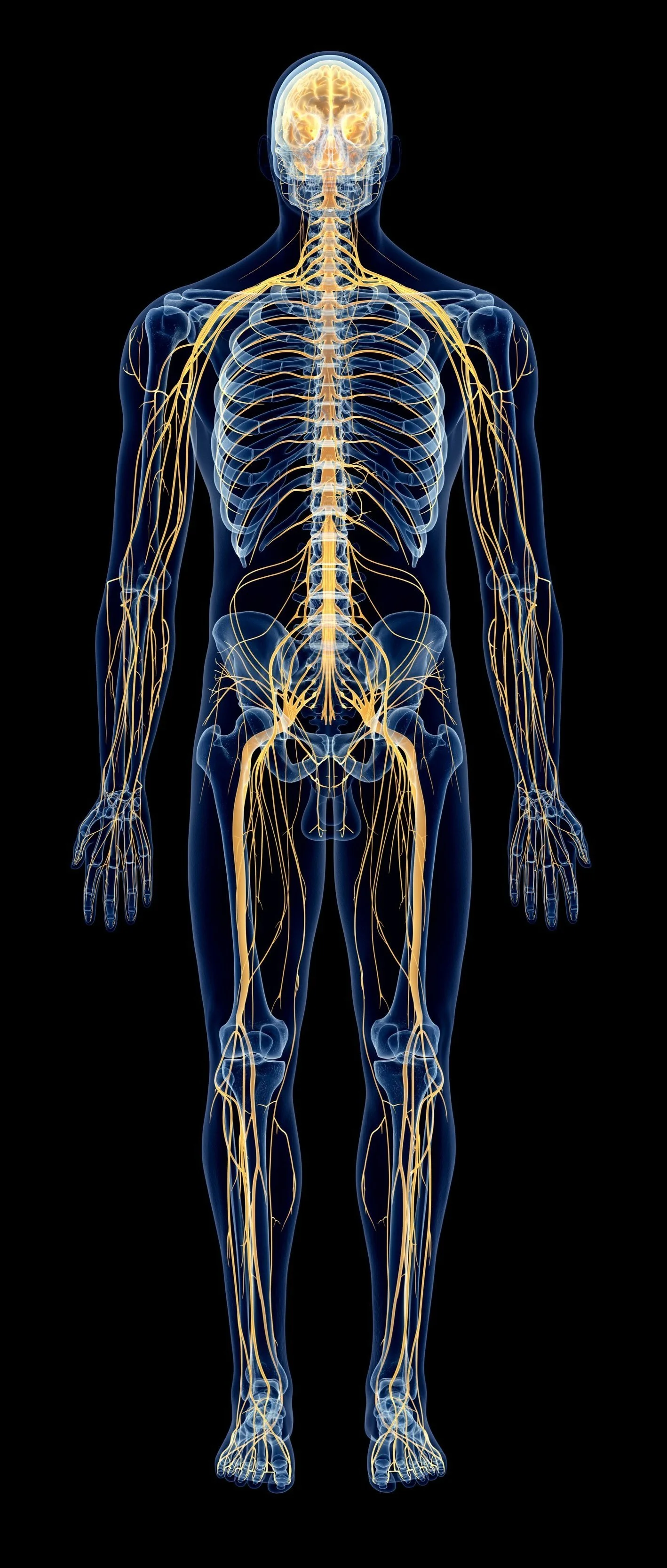
Peripheral nerve surgery is a subspecialty focused on treating injuries and disorders affecting nerves outside the central nervous system (brain and spinal cord).
Broadly speaking, peripheral nerves act like “electrical cables” that either:
Carry signals to muscles (motor nerves), triggering muscle contraction
Carry signals to the skin (sensory nerves), providing sensation
These nerves may be affected by abnormalities leading to various clinical signs:
Sensory symptoms: numbness, tingling, reduced sensation
Motor symptoms: loss of strength, muscle wasting (atrophy), etc.
Types of nerve disorders
Compression within an anatomical canal (entrapment syndromes):
The most well-known are carpal tunnel syndrome and ulnar nerve compression at the elbow. Nerves may be compressed at various points along their course, in both upper and lower limbs, due to naturally narrow anatomical passages.
Compression by a mass (swelling):
External to the nerve (e.g., synovial cysts near joints, bone spurs in osteoarthritis)
Within the nerve itself, most often benign nerve tumors such as schwannomas
Post-traumatic nerve injury:
Following fractures, dislocations, wounds, or surgery. Injuries may be partial or complete.
In some cases, sudden paralysis may occur without clear trauma, often linked to repetitive movements and possibly due to nerve torsion (twisting of the nerve). This is sometimes incorrectly labeled as Parsonage-Turner syndrome. Surgery may be required to enable recovery.
Peripheral nerve involvement related to systemic conditions:
Guillain-Barré syndrome
Charcot-Marie-Tooth disease (CMT)
Sequelae of poliomyelitis, etc.
Assessment and investigations
A detailed clinical examination of the affected limb is performed. Depending on findings, additional tests may be ordered:
Electromyography (EMG / nerve conduction studies) by a neurologist
Imaging (ultrasound, MRI) by a radiologist specialized in nerve imaging
Treatment
Depending on the evaluation, surgery may be recommended.
For entrapment syndromes and compressions by masses:
Surgical decompression and nerve release are performed.
For nerve injuries:
Two main surgical approaches exist:
Direct repair, with or without nerve grafting, when feasible
Nerve transfer, when direct repair is not possible (e.g., inaccessible nerve, severe damage). This involves transferring a functional nerve branch to reinnervate a paralyzed muscle or skin area.
In cases of muscle reinnervation, surgery should ideally be performed within six months after injury, as motor endplates begin to degenerate beyond this period.